

The Rovine del castello di Montecastrese are the remains of a medieval fortified settlement in the Municipality of Camaiore. You can plan a walk using the historic approaches described by the local archaeological museum, or follow the Camaiore Antiqua loop that includes the archaeological area.
- Setting: a fortified site with surviving walls, house remains and parts of a church.
- Loop option: 7 km, about 3 hours, with 250 metres of elevation gain and medium difficulty.
- Access: the final approach is a narrow path continuing from a private road.
The ruins and their setting
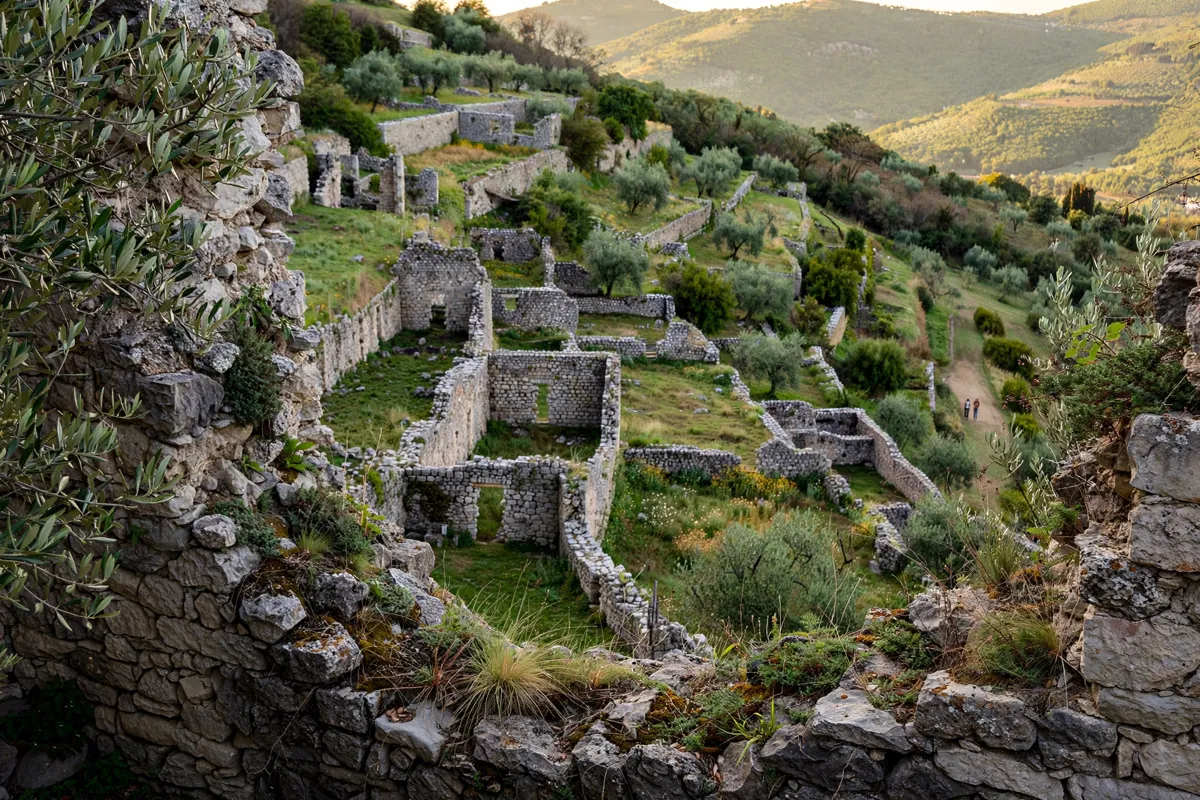
Montecastrese was a medieval fortified settlement, and its surviving remains include sections of the castle walls, houses and a church. The earliest archival document cited for the site dates to 1219 and names the castle “castrum Montecastresi,” jointly owned by the Corvaia and Vallecchia families.
Lucca conquered the castles in the Camaiore area in 1223 and ordered that those belonging to the two families not be rebuilt.
The surviving circuit of the walls has a perimeter just under 1 kilometre, with preserved sections reaching a maximum height of 4 metres. Many of the standing sections are on the southwestern side. Roughly 100 houses once stood inside the walls, mostly terraced along the western slope; most now survive only as perimeter walls.
Find parts of the church’s apse wall, a side wall and the façade. Its floor was cut directly into the rock. Inside the castle’s inner enclosure, a square tower survives to about 4.5 metres high. A cistern sits on a rise used for olive growing, not far from the walls.
Finds from the site, including pottery fragments, jugs and cooking pots dated to the 12th–14th centuries, are held at the Civico Museo Archeologico di Camaiore.
How do you get to Montecastrese?
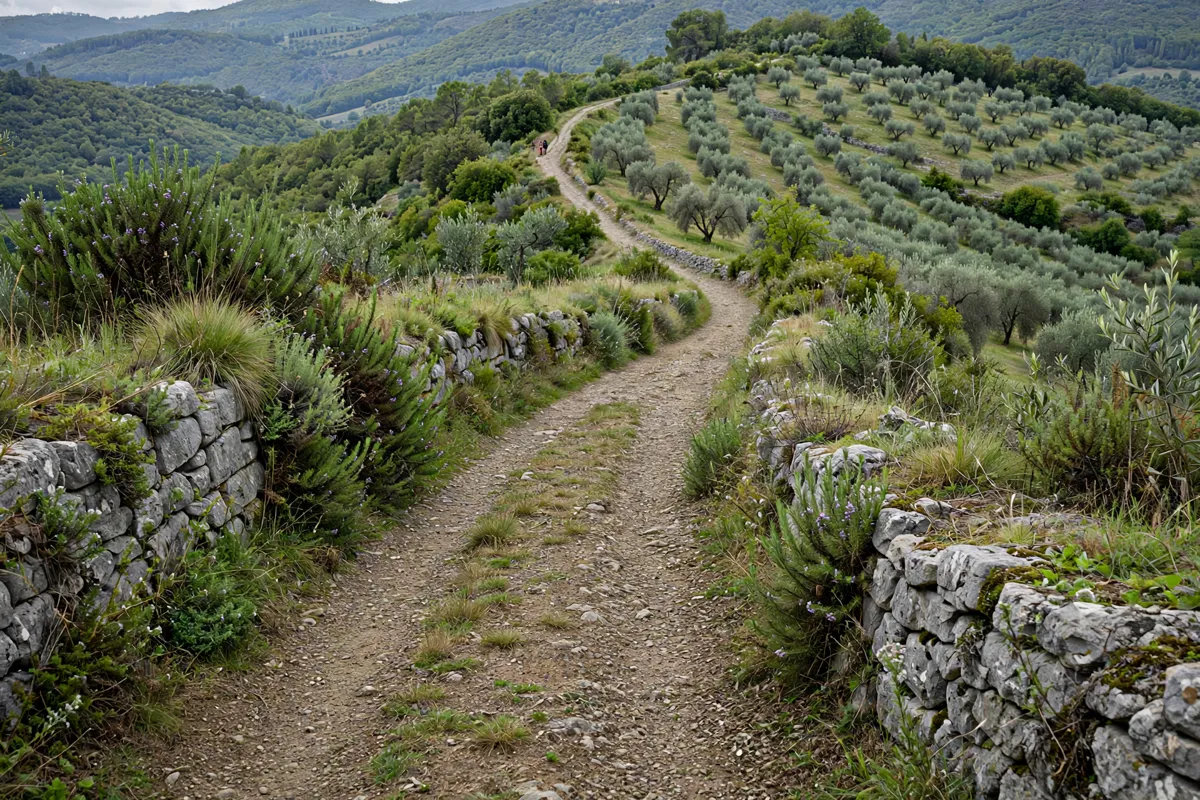
The museum describes two mapped approaches: one from the west, near the former church of Santa Barbara, and another from the east. The principal historic approach came from Camaiore, branching off shortly before Lombrici and continuing by mule track. For a separate town visit, the Camaiore town centre first-visit guide covers the centre.
A mule track from Metato and a path called “la via pubblica di Montecastre” converge on the narrow path leading to the fortified area. The museum describes that final path as continuing from a private road, so check the access arrangements before setting out rather than assuming that the road itself is open to the public.
Camaiore Antiqua describes the “Badia–Montecastrese–Badia” loop as 7 km and 3 hours, with 250 metres of elevation gain and medium difficulty. Its route includes a partly cemented path toward Metato, the archaeological area and the castle ruins, with some uphill stretches.
Access and conditions to check
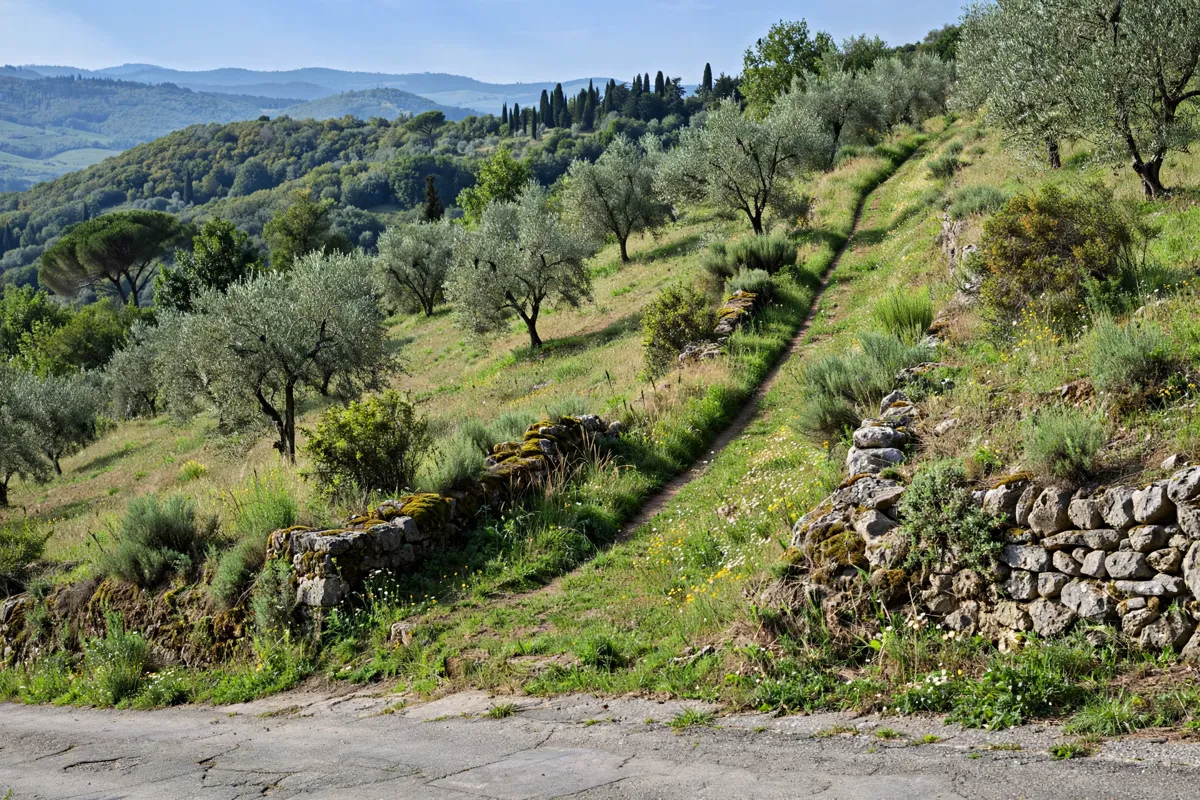
The final path is narrow, and the museum’s description does not establish public access rights, opening hours or ticket requirements. It also does not describe current trail conditions. Confirm access and conditions with the Civico Museo Archeologico di Camaiore before you go.
The loop is described as unsuitable for wheelchairs and strollers, suitable for animals, and recommended for children and families. These route details can help you judge whether the loop fits your group, but check the official site before you go for current access information.
Preparing for the walk
If you want to place the walk in a wider Camaiore itinerary, the Apuan Alps Regional Park is another local outing to consider.
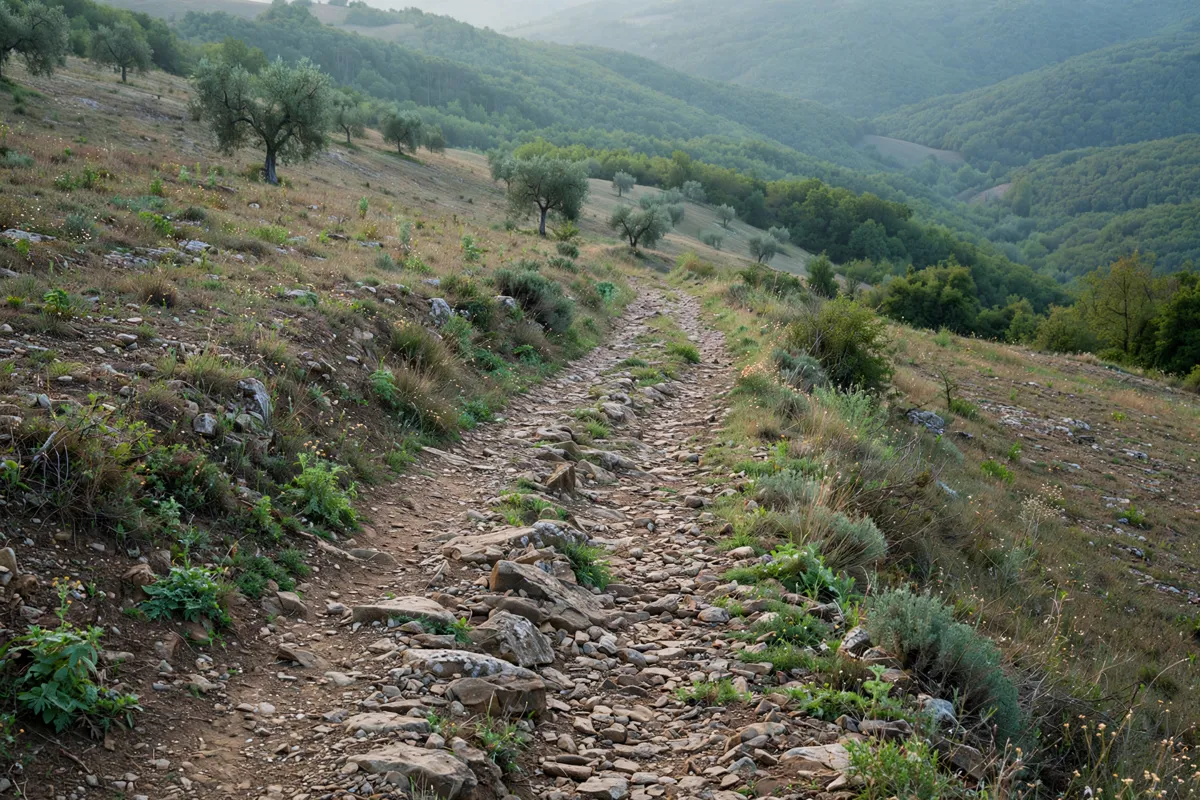
Allow about 3 hours for the loop, and take its 250 metres of elevation gain and uphill stretches into account when planning your walk. The route includes a partly cemented section, but the final approach to the fortified area is a narrow path; the loop is not suitable for wheelchairs or strollers.
From Bernardone in Camaiore, the ruins are about 2.7 km away; the journey is about 76 minutes on foot or about 10 minutes by car.
FAQs
How long is the Badia–Montecastrese–Badia loop?
The Camaiore Antiqua loop is 7 km and 3 hours, with 250 metres of elevation gain and medium difficulty.
What remains at Montecastrese?
Surviving features include sections of the castle walls, house perimeter walls, parts of a church and a square tower inside the inner enclosure.
Do you need a ticket to visit the ruins?
The museum’s access description does not specify ticket requirements or routine opening hours. Check with the Civico Museo Archeologico di Camaiore before planning your visit.